- Duration
- 30-60 minutes depending on composition
- Recommended sessions
- Stages at 4-6 week intervals
- Downtime
- 3-7 days depending on composition (scabs, redness)
Dr. Kim Tae-hoon, Medical Director · Reviewed by our medical director
Board-certified dermatologist · review date to be posted
Scars require staged treatment over multiple sessions, and the degree of improvement depends on scar depth and skin condition.
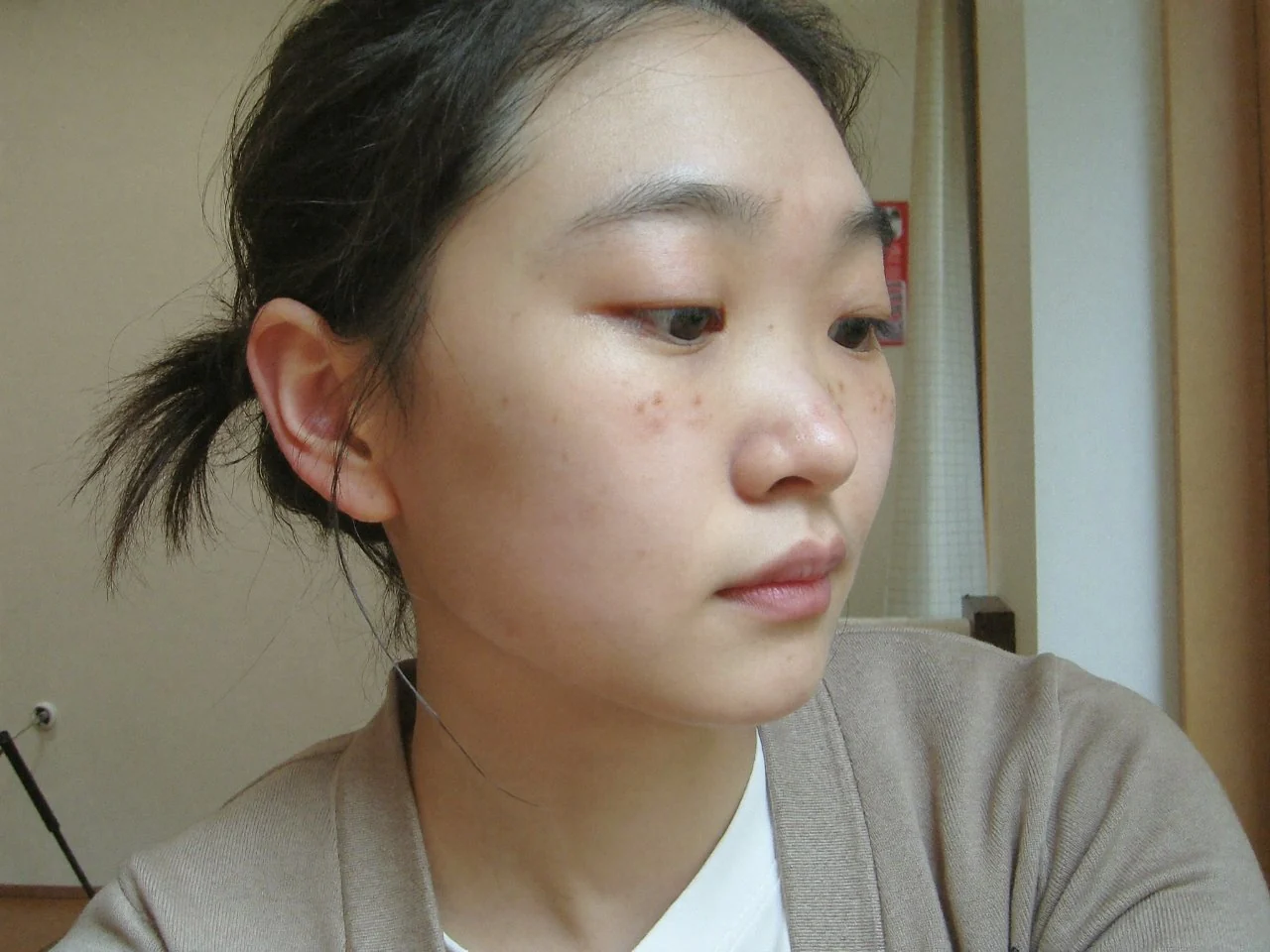
01Overview
Scar Combination Program Staged treatment designed around your scar types
The Scar Combination Program combines subcision, TCA cross, Legato II, erbium shouldering, and fractional CO2 according to each scar type.
- Duration
- 30-60 minutes depending on composition
- Recommended sessions
- Stages at 4-6 week intervals
- Downtime
- 3-7 days depending on composition (scabs, redness)
- How long it lasts
- Improvements are lasting — gains accumulate stage by stage
How we approach it
The same device can be run very differently. This is how Grays approaches this treatment.
Alongside classification by shape — rolling, boxcar, ice-pick — we look at something more important: classification by stage. The approach differs depending on whether this is an acne mark, an early scar, or a mid- or late-stage scar.
We combine manual subcision, laser- and EBD-based micro-subcision, collagen boosters that encourage normal collagen formation, and radiofrequency treatments. Matching the skin's capacity to recover and its baseline condition, we choose the less invasive routes with less downtime — fewer adverse effects, better treatment efficiency and satisfaction.
The intensive programme runs in three stages. Early on we balance oil and water, settle overactive sebaceous glands to suppress new acne, and build a skin baseline that can withstand strong scar treatment. In the middle stage we carry out the scar treatment above. In the late stage we improve the remaining pigmentation and red marks, and maintain firmness and the oil–water balance.
Dr. Kim Tae-hoon, Medical Director · Reviewed by our medical director
02What to expect
Changes over time
The principle is to use a different method for each type: releasing tethered tissue in depressed scars (subcision), inducing chemical regeneration in narrow deep scars (TCA cross), and refining the edges with lasers.
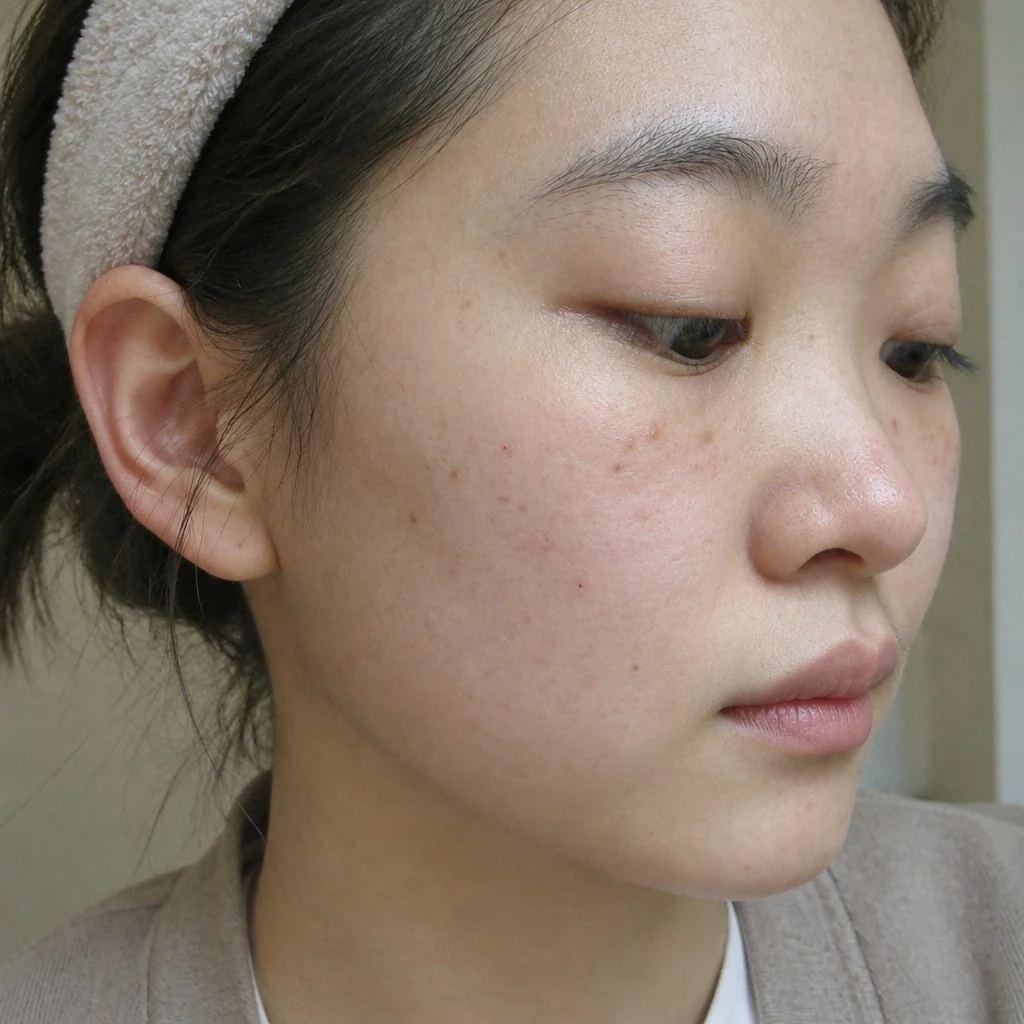 01
01Right after treatment
Depending on the combination, redness, pinpoint bleeding and crusts are possible.
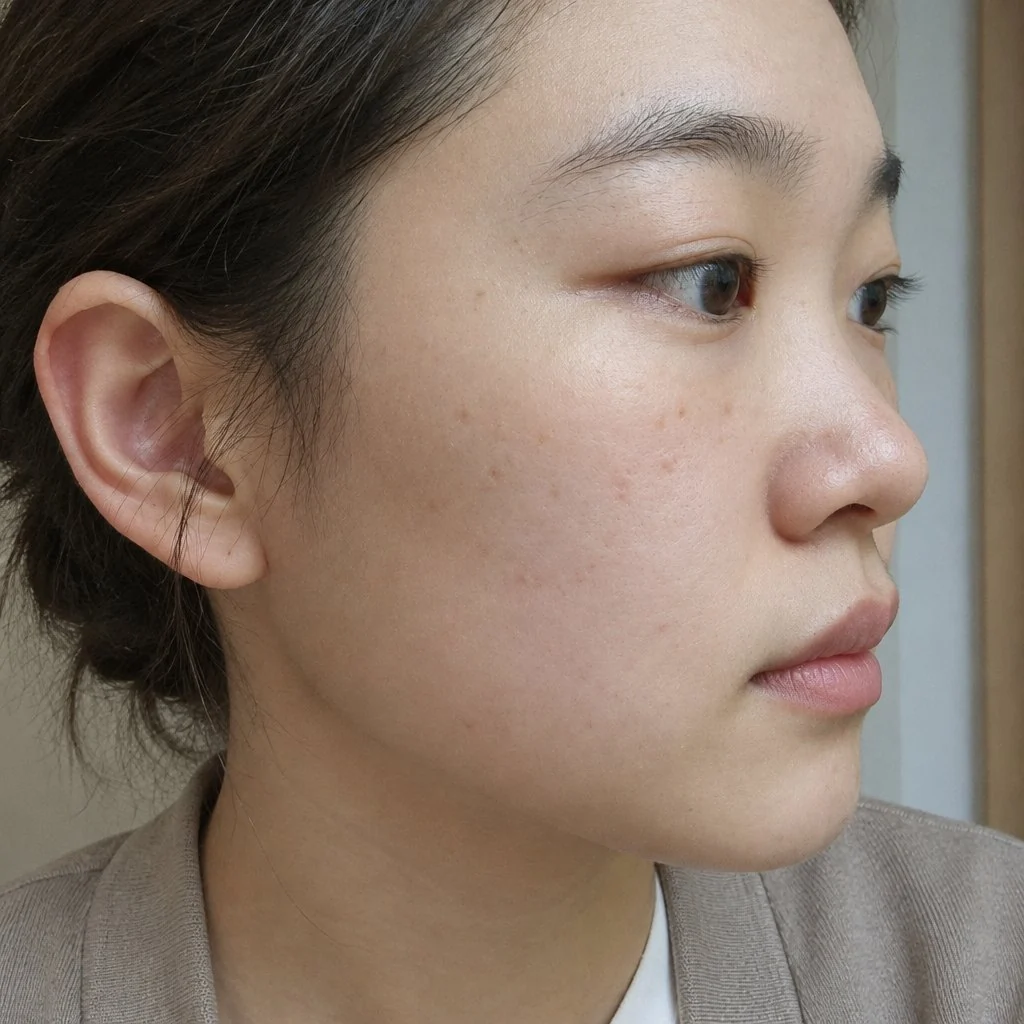 02
02Days 3–7
The surface recovery window. Regenerative care runs alongside.
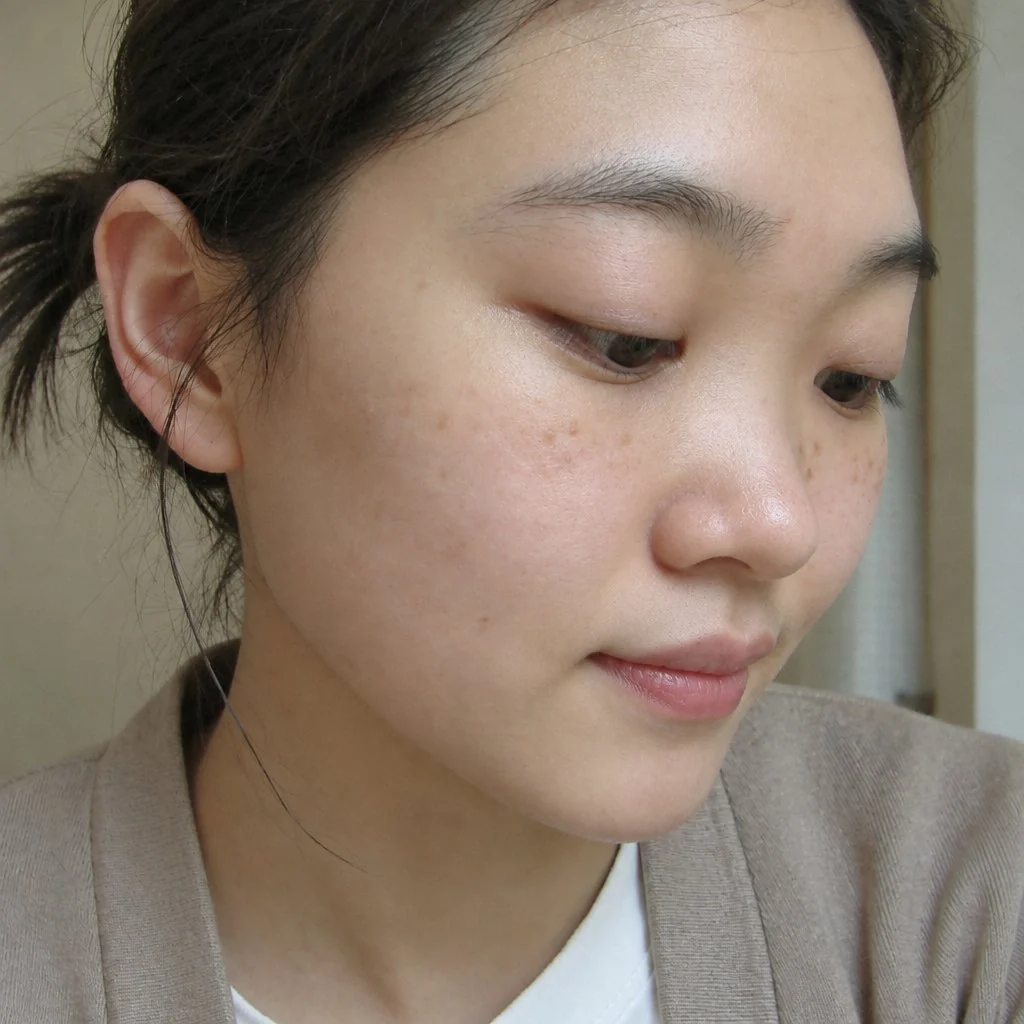 03
03Every 4–6 weeks
Stages repeat at this interval. We usually plan three to six stages or more.
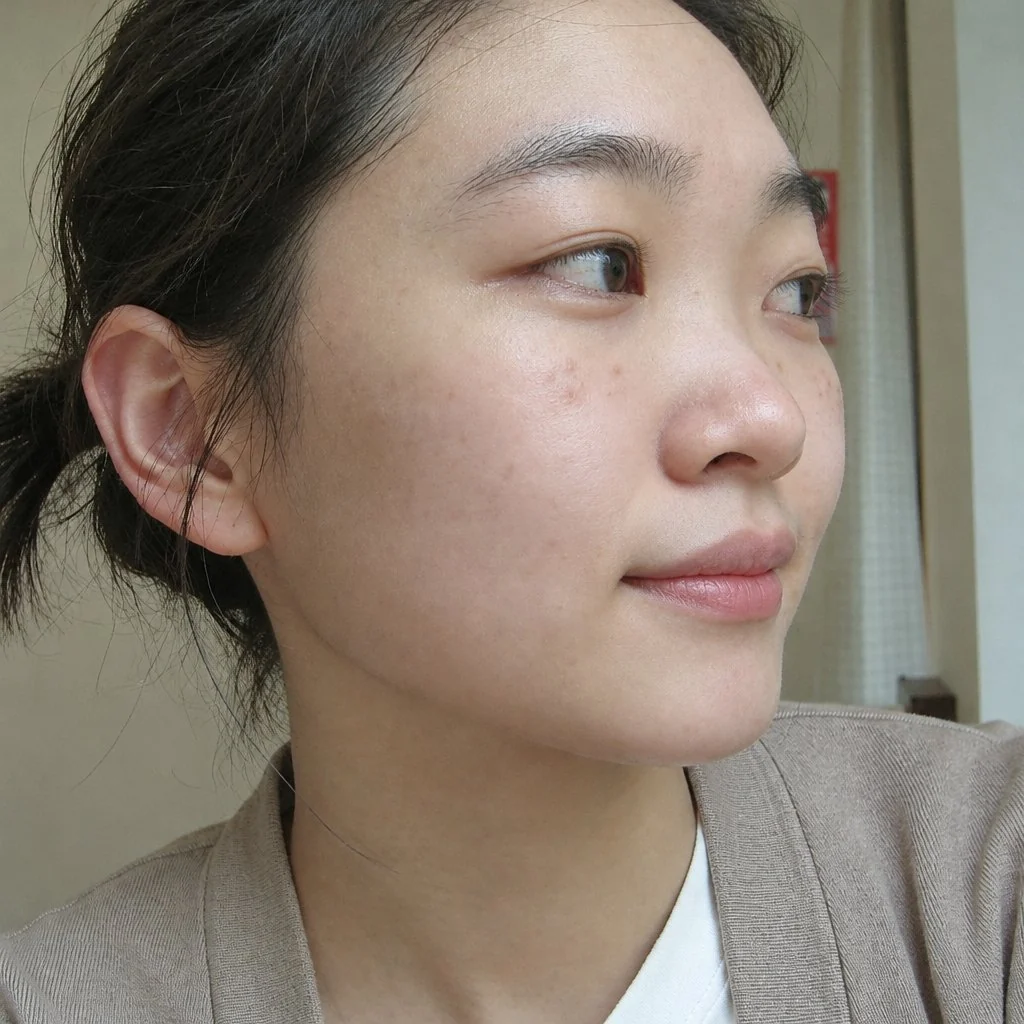 04
04Reviewing each stage
We watch the response by scar type and adjust the next stage's combination. The goal is 'less noticeable'.
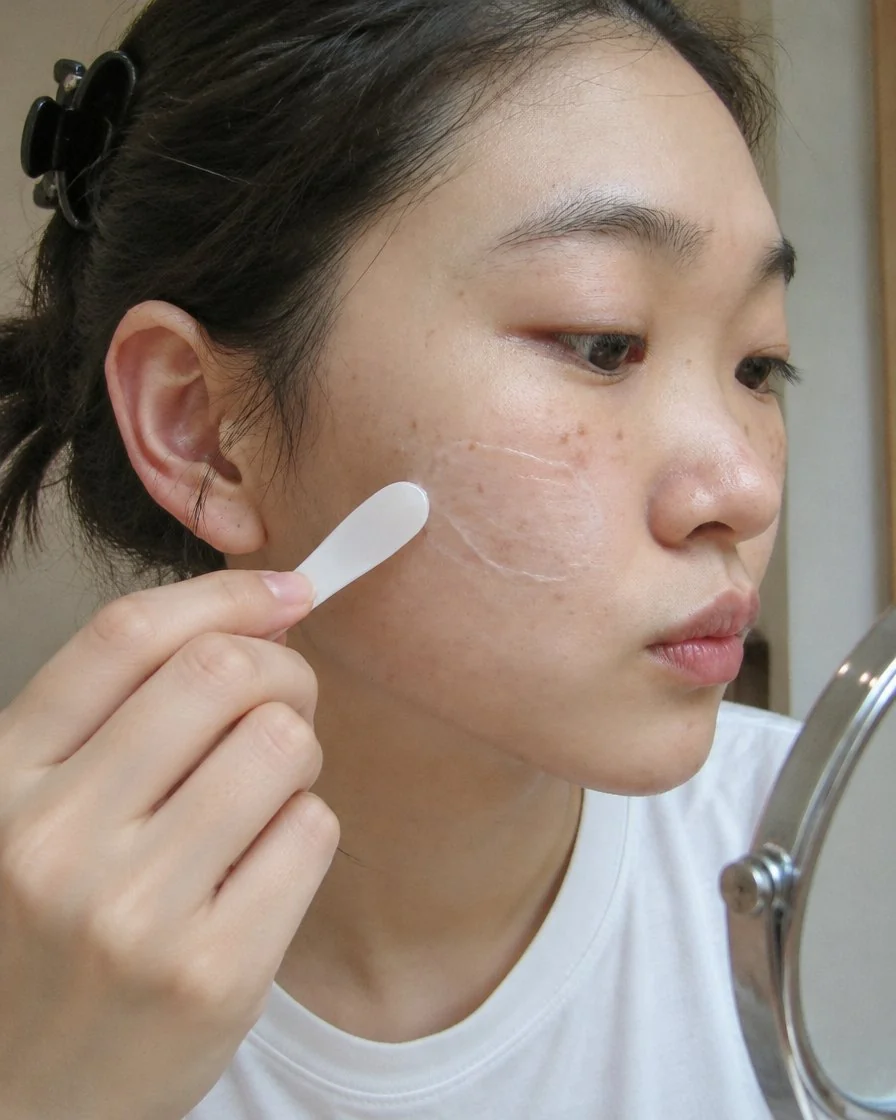
These images were generated with AI. They are not photographs of patients and do not show treatment results; they illustrate the recovery process. The actual course varies from person to person.
04Procedure
How your visit goes
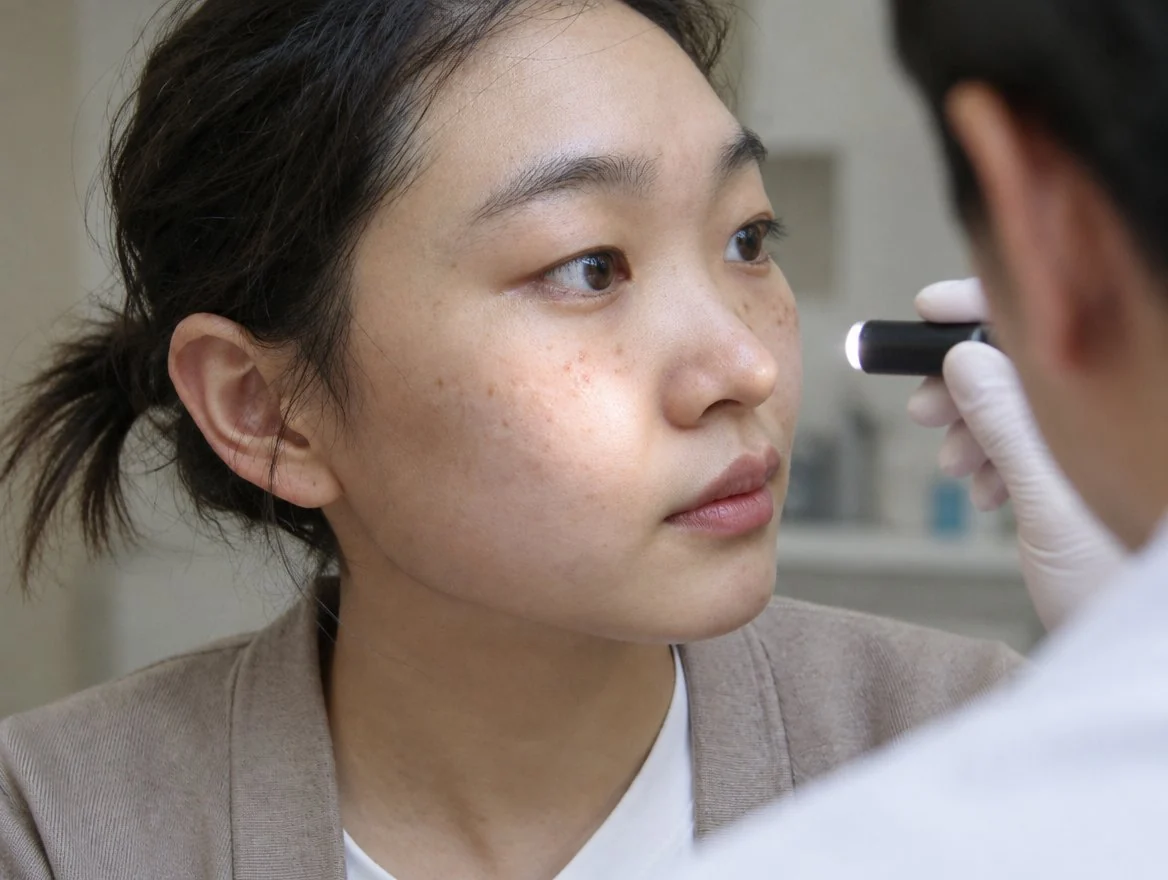 01
01Specialist diagnosis
Scar types (boxcar, ice pick, rolling) are mapped across the face.
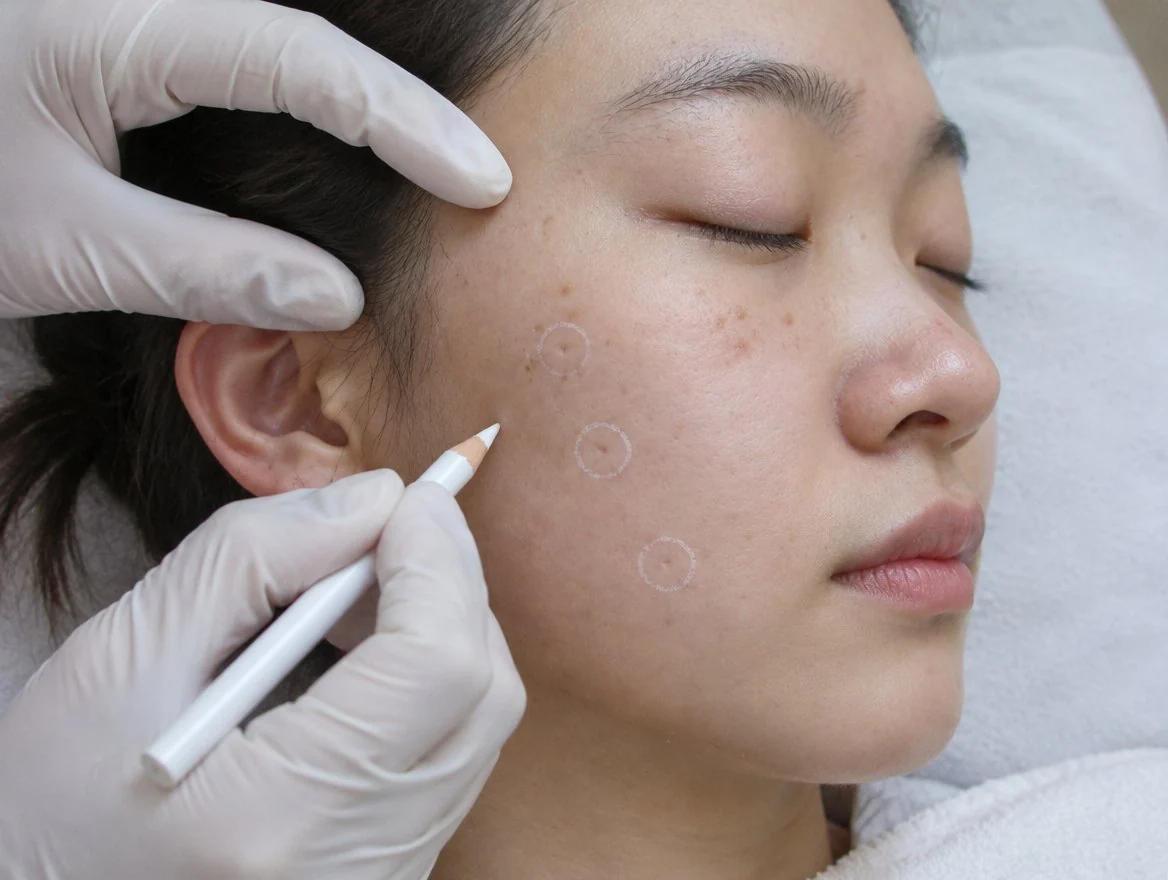 02
02Stage design
The combination and sequence are set per type.
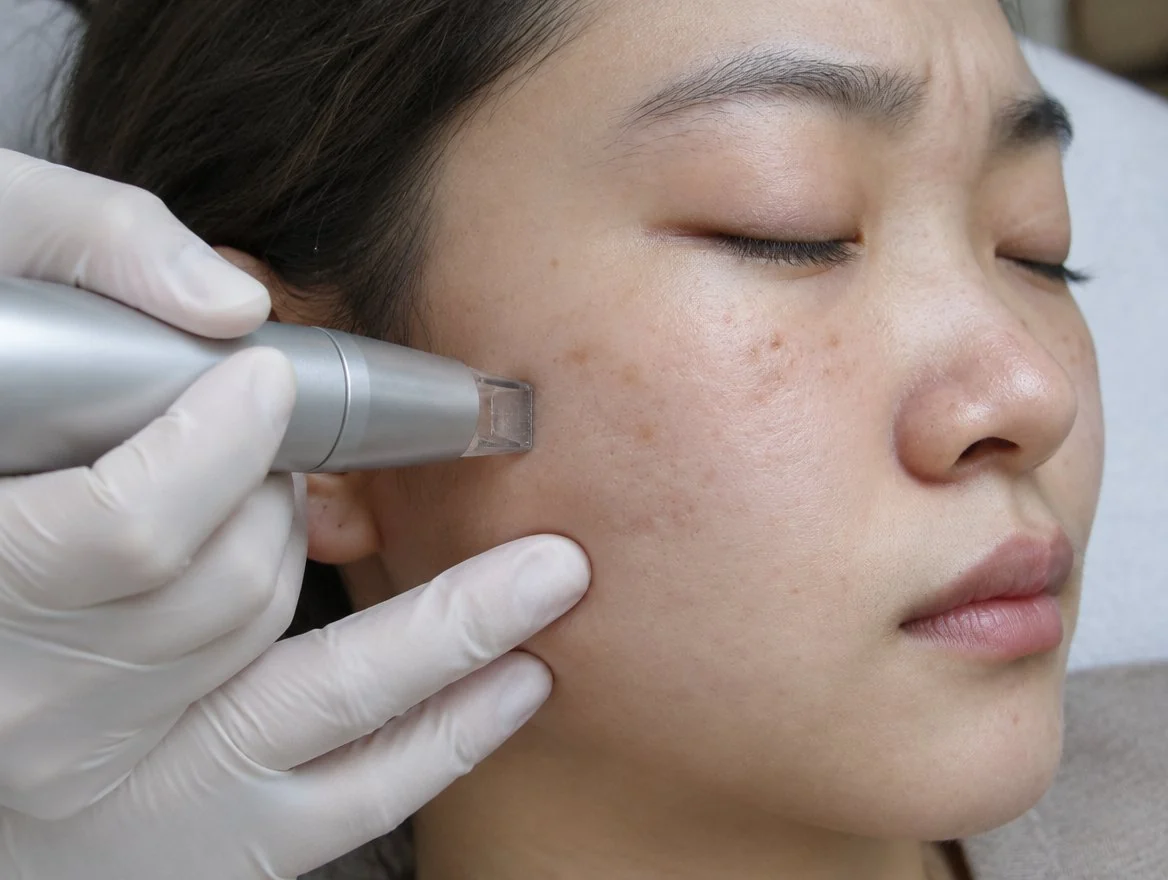 03
03Treatment
Performed directly by a board-certified dermatologist (subcision, TCA, lasers).
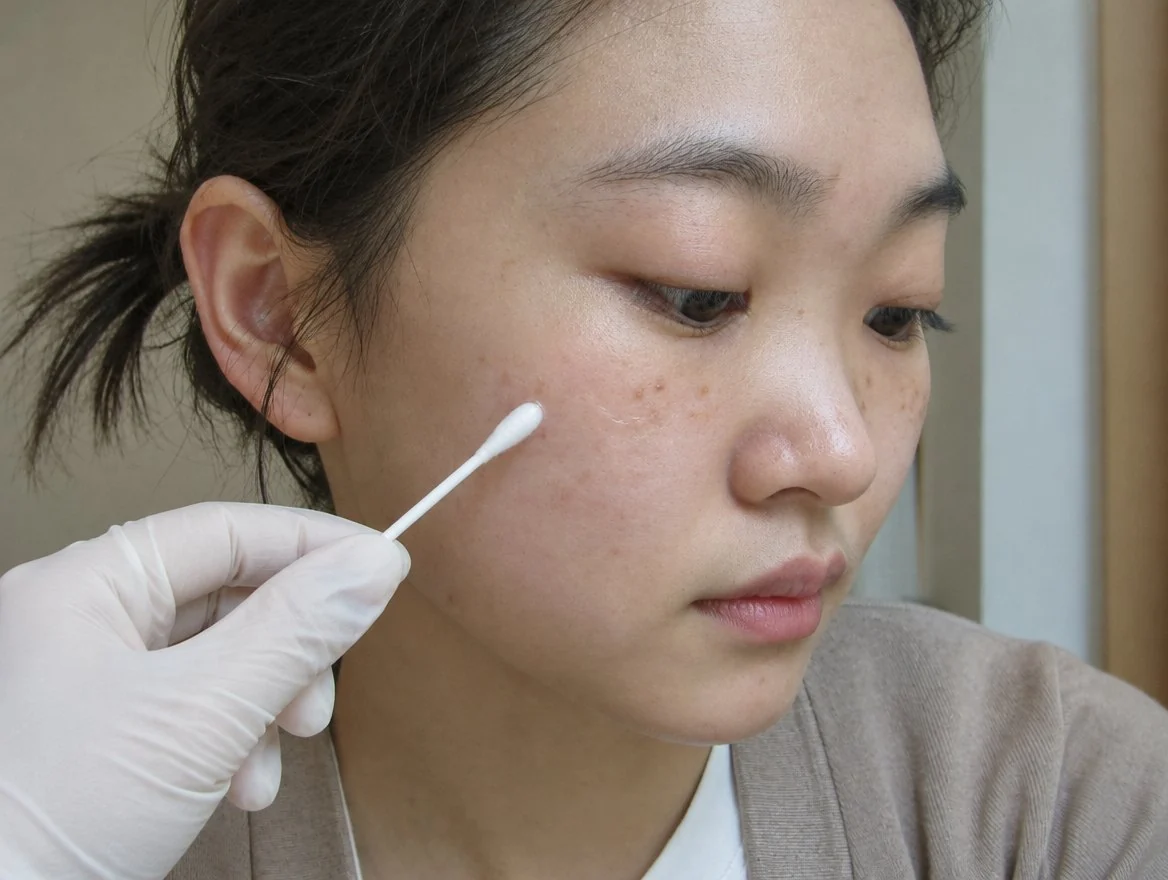 04
04Regenerative care
Recovery-stage regenerative care runs alongside treatment.
Every procedure is performed directly by a board-certified dermatologist.
05Before / After
Before & After
Scar combination program, stage-by-stage progress
Clinical photos. Results vary with skin condition, age and treatment plan. Before-and-after photos are published with the patient's written consent, taken under identical conditions (lighting, angle) and never retouched. Results vary by individual.
06Aftercare
Recovery & care
- 01
Day of treatment
Mild redness and stinging are possible. Do not rub — cleanse gently and moisturise well.
- 02
Crusting and flaking
Subcision sites can bruise for one to two weeks. Please follow the compression instructions.
- 03
1–4 weeks
Sun protection decides the result. Apply SPF 30 or higher daily, and reapply every two hours outdoors.
- 04
Follow-up
Intervals and whether to continue are adjusted as we watch your response.
07FAQ
Frequently asked questions
How does treatment differ by scar type?
The method depends on the shape and cause of the scar. Among depressed acne scars, we mainly consider subcision to release the tethering for rolling scars where the skin is pulled down from below, TCA cross for narrow, deep ice pick scars, and edge refinement with Legato II, erbium shouldering, fractional CO2, and similar methods for boxcar scars with defined edges. Several types are often mixed on one face, so a board-certified dermatologist maps the scar types by area at the first visit and then decides the combination.
Can surgical or injury scars, or raised (hypertrophic) scars, also be treated?
Whether and how to treat them is decided after consultation. The Scar Combination Program is designed mainly around depressed acne scars, so surgical or injury scars and raised scars may need a different approach depending on their location, size, and when they formed. If you are prone to keloids or a scar is getting larger, be sure to tell us at your visit.
Why can't a single laser do it all?
Depressed scars differ in the degree of tethering, depth, and edge shape, so one method rarely suits every type. For example, scars caused by tethering under the skin need a separate step to release it, apart from laser. Classifying the types and combining methods is the principle of the Scar Combination Program, and the degree of improvement varies by individual.
How many stages does it take, and how far apart are they?
We typically plan 3-6 or more stages at 4-6 week intervals, and the exact number is decided based on scar depth and skin condition. At each stage we check how each scar type responds and adjust the combination for the next stage. At your first visit, we set out the overall framework of the plan with you.
Is the treatment very painful?
Pain is moderate and managed with anesthesia. Topical numbing cream is standard, with local anesthesia added depending on the composition, and the treatment takes 30-60 minutes depending on the composition. How it feels varies by individual, so please tell us during treatment if you are uncomfortable.
I'm worried about downtime.
Depending on the composition, a recovery period of about 3-7 days with redness and scabs is needed. Bruising in areas treated with subcision may last 1-2 weeks. If you have an important event, let us know in advance and we will adjust the intensity or split the stages.
Can old scars also improve?
Old scars whose shape has set can also be treated. However, the realistic goal is not to erase scars but to make them less noticeable by reducing their depth and edges, and the degree of improvement depends on scar depth and skin condition. Treatment proceeds by building on the improvement gained at each stage.
I still get acne. Can I start scar treatment?
If inflammation is ongoing, we recommend first stabilizing the acne or managing it alongside scar treatment. This is because new breakouts can add new scars. So in the early phase, we balance oil and moisture and control overactive sebaceous glands to build a skin foundation that can tolerate scar treatment, then move on to full scar treatment.
Can I have it together with other treatments?
Yes, depending on the scar condition and stage, other treatments can be planned together. We consider Potenza, a microneedle RF treatment, for scar tissue and pores; Juvelook to support collagen formation; and PicoWay for pigmentation remaining after scar treatment. Whether to do them on the same day or space them apart is decided after consultation, considering the load on your skin.
What are the side effects and precautions?
Redness, pinpoint bleeding, and scabs may occur after treatment, and bruising may appear in areas treated with subcision. Picking scabs or exposure to UV can increase the risk of pigmentation. Be sure to tell us at your visit if you are prone to keloids, are pregnant, take photosensitizing medication, have recently tanned, or have an infection or wound in the treatment area.
How should I care for my skin after treatment?
Wash gently without rubbing, moisturize well, and let scabs fall off on their own. Sun protection is especially important for 1-4 weeks, so apply SPF30 or higher daily and reapply every 2 hours when outdoors. For areas treated with subcision, follow the compression instructions we give you, and regenerative care matched to your recovery stage is provided alongside.
How do I book a scar consultation in Haeundae, Busan? How much does it cost?
You can book via Naver Booking, our KakaoTalk channel, or phone (+82-51-710-1891), and consultations are also available via LINE; Grays Dermatology is located at L Tower 10F, 6 Jwadongsunhwan-ro, Haeundae-gu, Busan (near Jung-dong Station on Busan Metro Line 2). The cost depends on the composition for your scar types and the number of stages, so we present it with your full treatment plan after consultation. Please also refer to the price list on our website.
Fees
Pricing depends on composition and stages, and is presented with your full treatment plan after consultation.
See the fee schedule →References 3
- Korea MFDS medical device registry — searchable by approval number
- Korean Dermatological Association — specialist credential lookup
- Reviewed by: Dr. Kim Tae-hoon, Medical Director
⚠ Cautions & contraindications
- —Active infection or an open wound in the treatment area
- —Recent strong sun exposure or tanning (raises the risk of pigmentation)
- —A photosensitivity disorder, or taking photosensitising medication
- —Pregnancy (not recommended — safety data are insufficient)
- —If you are prone to keloids, you must tell us at the consultation
Summary & comparison
| Treatment | Target layer | Main change | Duration | How long it lasts | Downtime |
|---|---|---|---|---|---|
| Scar Combination Program ← | — | Staged treatment designed around your scar types | 30-60 minutes depending on composition | Improvements are lasting — gains accumulate stage by stage | 3-7 days depending on composition (scabs, redness) |
| Ultherapy PRIME | L3 Fat layer | Ultrasound lifting that reaches the SMAS layer | 40-60 minutes depending on area | Typically 6 months to 1 year (individual results vary) | Immediate return to daily life; temporary swelling or tingling possible |
| Tune Face | L3 Fat layer | RF lifting that tunes texture, firmness, and contour together | 30-50 minutes | Maintained over several months (individual results vary) | Immediate return to daily life |
| Oligio | — | Monopolar RF tightening with a lighter footprint | 30-50 minutes | Several months to 1 year (individual results vary) | Immediate return to daily life |
| Juvelook / Juvelook Volume | L2 Dermis | A regenerative booster that stimulates your own collagen | 20-30 minutes | Reported to last over a year after completing the course (individual results vary) | Slight swelling or bruising possible for 1-3 days |
Treatments used for the same concern, placed side by side. Which one fits is decided in consultation after the layer is identified.
Reviewed byDr. Kim Tae-hoon, Medical Director · Board-certified dermatologist · review date to be posted
Aftercare
Draft — pending medical director's reviewPore · scar lasers
These treatments create micro-injuries to trigger regeneration, so care over the following days is directly linked to the result.
Recovery course
- Day of treatmentRedness, warmth and swelling are clearly visible. Focus on soothing and moisturising.
- Days 2–4Fine crusts and flaking appear. Do not peel them off.
- Days 5–7Flaking settles and makeup can be worn comfortably.
- Months 1–3Changes in scars and pores appear over this period. If sessions are split, keep to the interval.
Avoid during this period
- Sun exposure — for at least 2 weeks; apply sunscreen daily
- Sauna, hot baths, strenuous exercise and alcohol — for 3–5 days
- Exfoliating products — for 2 weeks
Contact the clinic if
- Weeping, pus or fever
- Redness getting worse beyond 2 weeks
- Blisters similar to cold sores if you have a history of herpes
Next session · next visitSessions are usually 3–4 weeks apart. Scars often need several methods combined.
Individual recovery varies. If it differs from what you expected, do not judge on your own — please contact the clinic. Tel +82-51-710-1891
View all aftercare →Related treatments
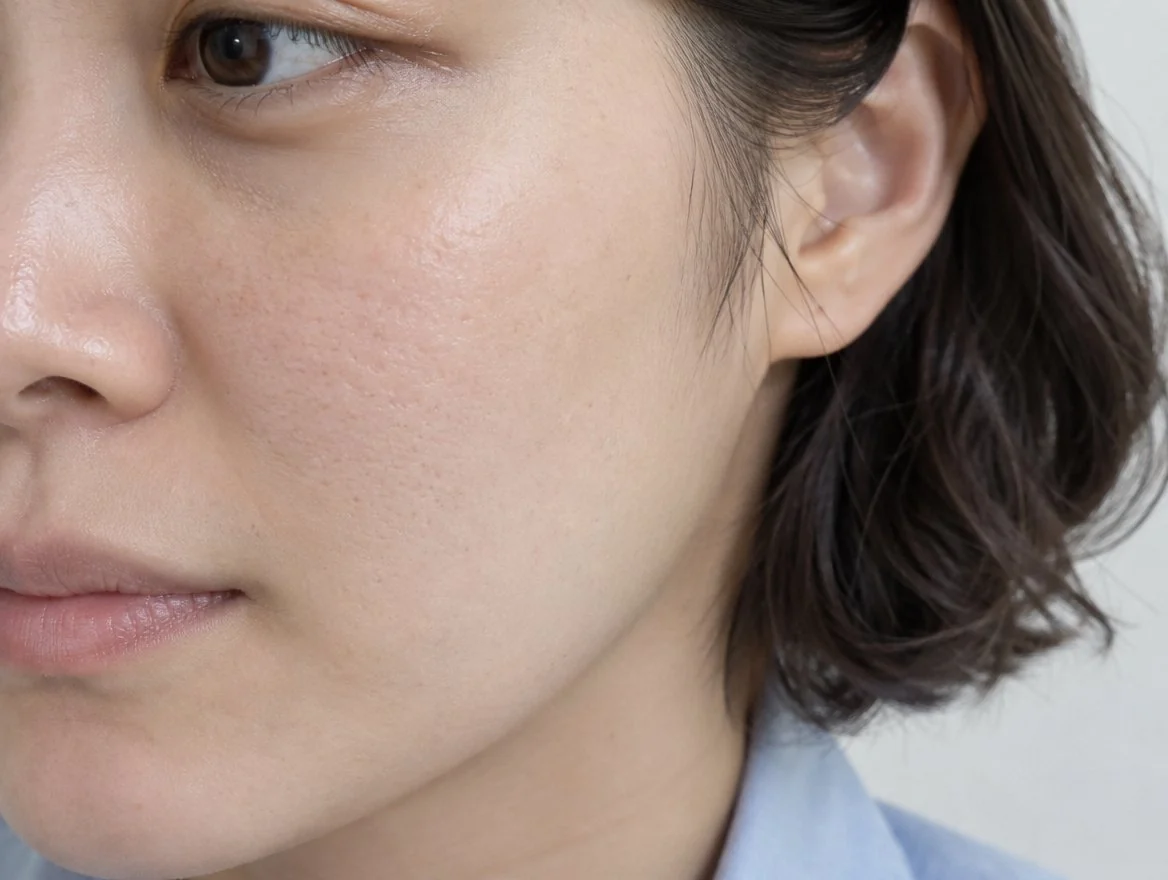
People and scenes shown are AI-generated for illustration. They are not actual patients, staff, our clinic, or treatment results.
Next step
Wondering if this treatment fits you?
Leave your main concern and request a consultation. Suitability, schedule and fees are confirmed at your consultation.